Benefits Of Asexual Reproduction New Content Upload 2026 #961
Start Streaming benefits of asexual reproduction boutique viewing. Freely available on our media source. Lose yourself in a wide array of shows provided in flawless visuals, the best choice for discerning viewing devotees. With fresh content, you’ll always be informed. Explore benefits of asexual reproduction curated streaming in stunning resolution for a absolutely mesmerizing adventure. Register for our video library today to experience content you won't find anywhere else with zero payment required, no sign-up needed. Benefit from continuous additions and dive into a realm of one-of-a-kind creator videos created for select media lovers. Don't pass up one-of-a-kind films—get it in seconds! See the very best from benefits of asexual reproduction specialized creator content with breathtaking visuals and special choices.
Asexual reproduction is a cloning process that involves only one parent and produces offspring that are identical to the parent Understanding these reproductive strategies is crucial for studying biodiversity, conservation, and evolutionary biology. Learn the pros and cons of this reproductive method for plants and animals, such as energy requirements, evolution, diversity, and population control.
PPT - REPRODUCTION PowerPoint Presentation - ID:6900371
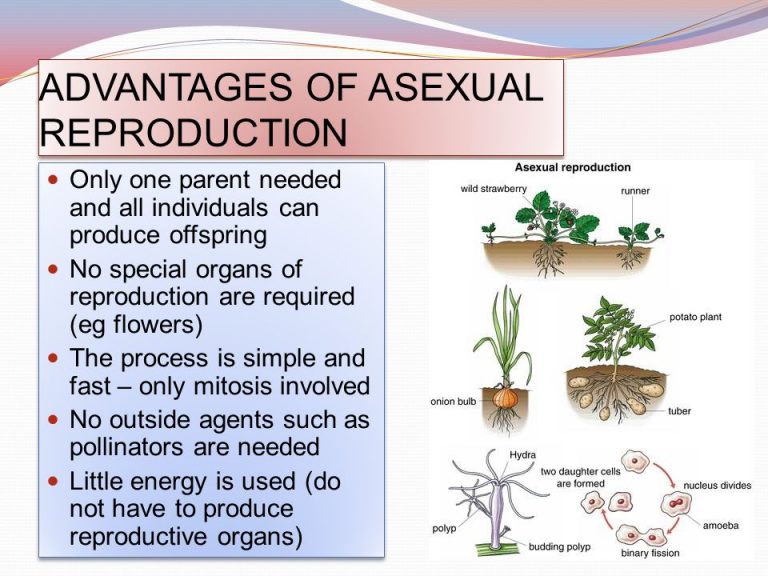
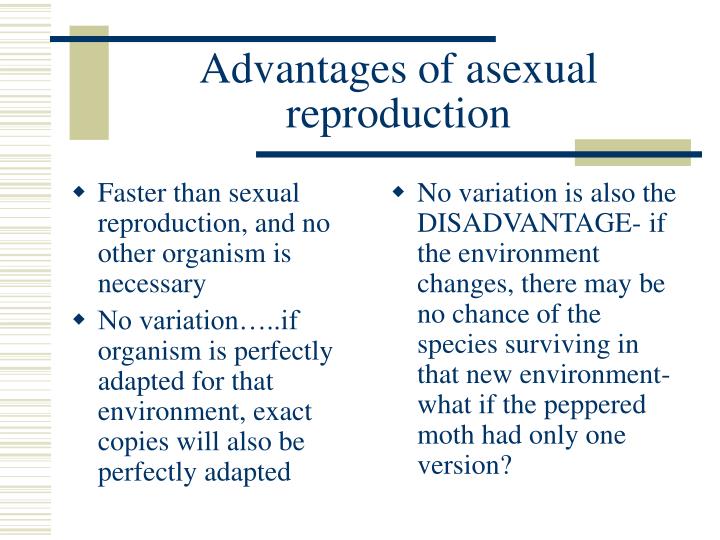
Asexual reproduction offers several strategic benefits to organisms, allowing for efficient propagation and adaptation to specific environmental conditions The prevalence of each method across different species and environments highlights nature’s diverse strategies for survival and propagation Below are key advantages of asexual reproduction:
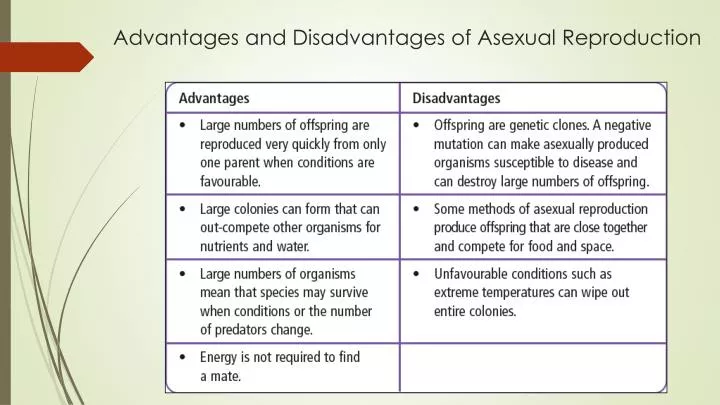
Pros and cons of asexual reproduction asexual reproduction, involving the production of genetically identical offspring without gametes, offers notable benefits and challenges
Its advantages include rapid population growth, energy efficiency, and not requiring a mate, which aids in quick recovery from disturbances. Asexual reproduction is a fascinating biological process through which an organism can reproduce without the involvement of another organism or the fusion of gametes (sex cells) This method results in offspring that are genetically identical to the parent, essentially producing clones Learn about sexual and asexual reproduction for aqa gcse biology
Find information on advantages and disadvantages of each, and asexual reproduction mechanisms. Asexual reproduction is when an organism produces offspring with the same dna as the parent, without combining with another organism Learn about the different forms of asexual reproduction, such as budding, parthenogenesis, and vegetative reproduction, and the advantages and disadvantages of this mode of reproduction. Both asexual and sexual reproduction offer unique advantages and disadvantages